TWB’s response in Mozambique

Cyclone Idai, which struck Mozambique, Malawi, and Zimbabwe in March 2019, threw millions of lives into turmoil. Five weeks later, Cyclone Kenneth struck the Comoros Islands,  the north of Mozambique, and southern Tanzania. More than 747,000 Mozambicans in the storm’s path faced risks of flooding and landslides.

Communication is one of the things people need most urgently in disasters like these.

They need to know where they can find shelter, what help is available, and how to protect themselves from exploitation and abuse. They need to let others know they are safe, and to alert rescuers to missing family members. As the waters subside and they see what they have lost, they need to let the authorities and aid organizations know what to prioritize in the recovery effort.

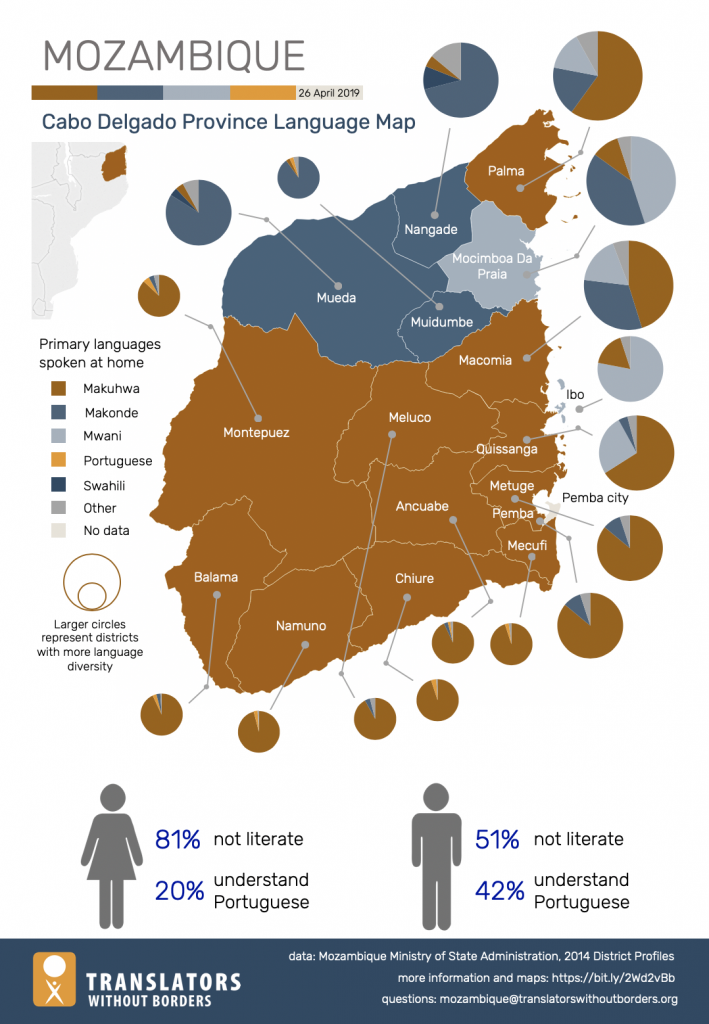
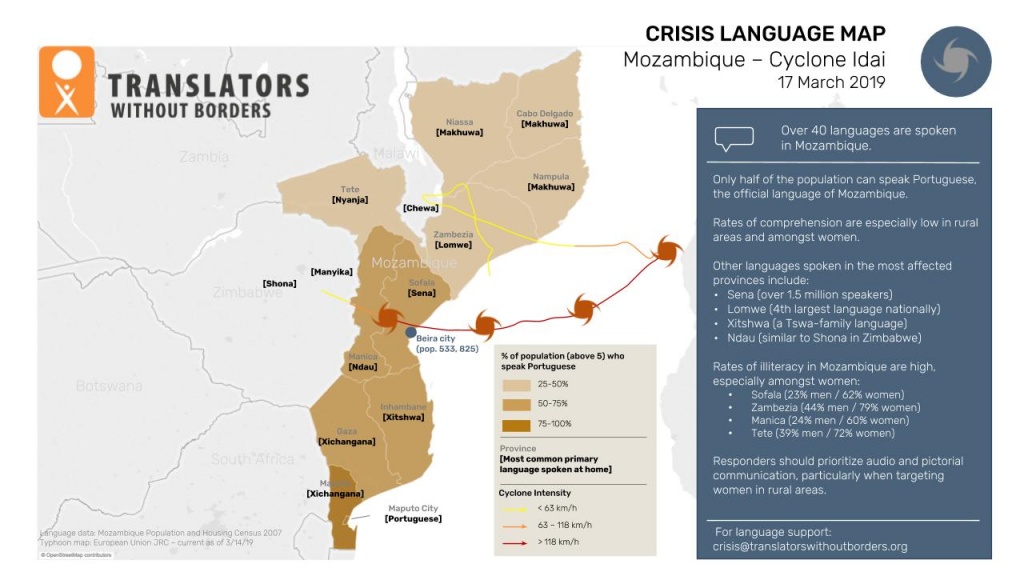
In Mozambique, a country with more than 40 mother tongues, making sure that communication is in the right language is vital. Portuguese, the official language, is not widely spoken outside urban coastal areas. In the five worst-hit provinces, other languages predominate, including Sena, Ndau, Lomwe, Nyanja, and Makhuwa.

The format of communication is also crucial. Since over two-thirds of women in the affected provinces are not literate, information and feedback mechanisms must use radio, word-of-mouth, and other audio formats to be accessible.

TWB responded within days of Cyclone Idai. Initial support includes translation, language assessments, and language mapping, to facilitate two-way communication between crisis-affected people and humanitarian responders.

To learn more about TWB’s support in Mozambique, contact mozambique@translatorswithoutborders.org.

Read the latest updates from the cyclone response
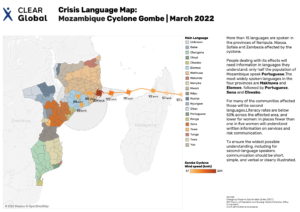

Mozambique Cyclone Gombe Crisis Language Map March 2022

Tropical Cyclone Gombe has severely affected Mozambique. We created this crisis language map for humanitarians to be able to communicate with and support people looking for help. Learn more.

The Global Education Cluster and Child Protection Area of Responsibility asked Translators without Borders to consult practitioners in Mozambique, DRC, and Bangladesh, on the accessibility and use of their technical guidance. We identified two types of barrier to document accessibility: barriers to physical access and barriers to understanding. We found that intended users face both types of barrier with Global Education Cluster and Child Protection Area of Responsibility resources. Learn more.

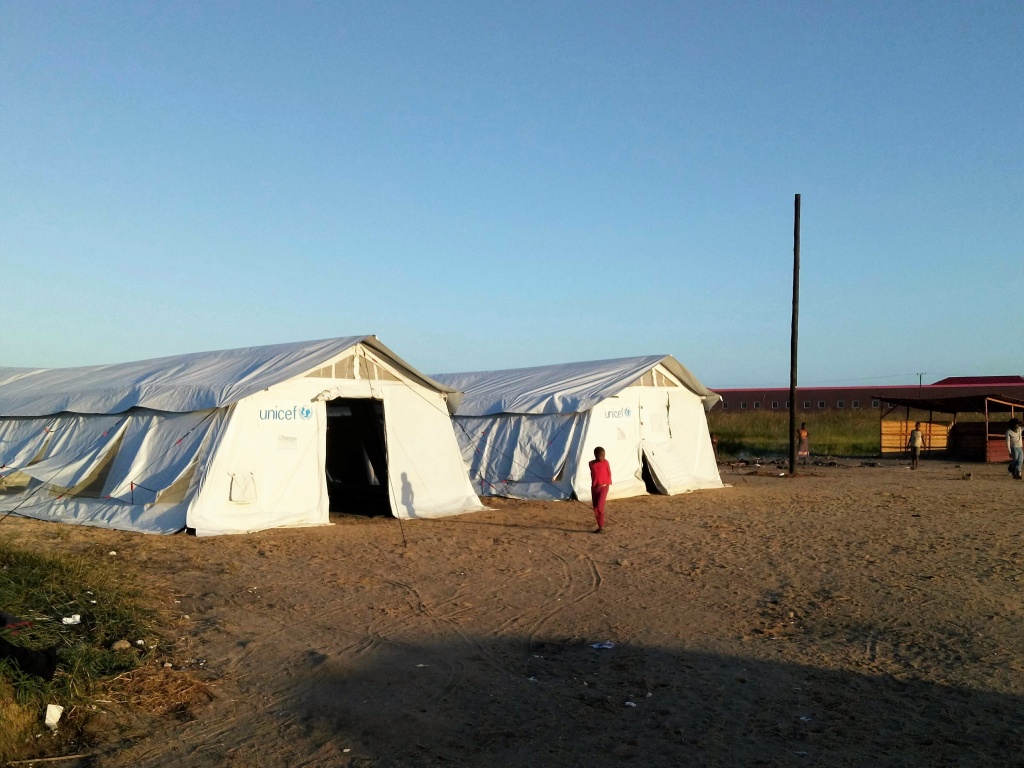
PICOCO refugee camp child spaces Mozambique Cyclone Idai Comprehension study

When it hit Mozambique in March 2019 Tropical Cyclone Idai had a devastating impact for an estimated 1.85 million people. In addition to shelter and food, they need information and a voice. When disaster strikes, communication is crucial.
Read TWB's comprehension report in English, or Portuguese.

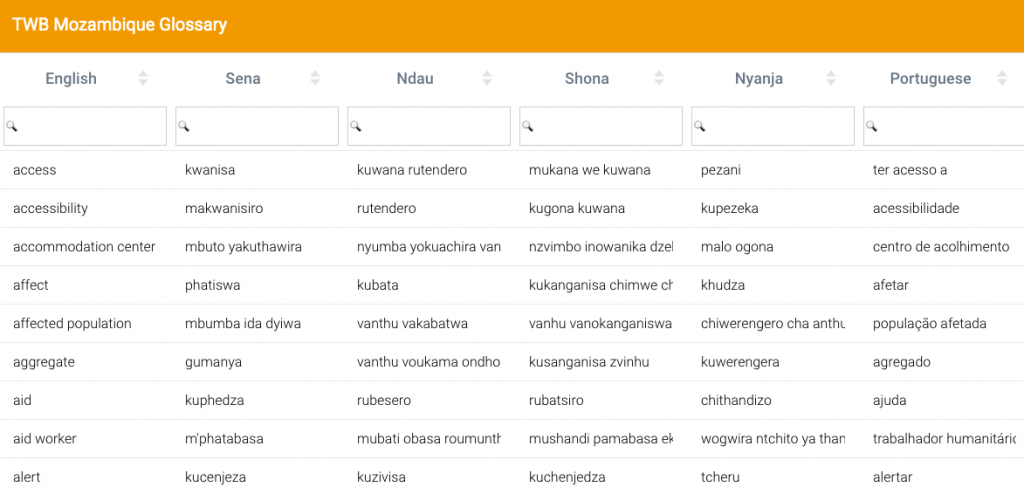
This glossary includes terminology for emergency response and early recovery in Portuguese, Ndau, Nyanja, Sena, Shona, and English.
View and use the glossary here. 

Language data and mapping help responders know which languages and formats they should use to communicate with crisis-affected people.
In Mozambique, a country with more than 40 mother tongues, making sure that communication is in the right language is vital. Portuguese, the official language, is not widely spoken outside urban coastal areas. Responders should reference language data when planning their response. 
See the language maps for Mozambique.

Photo credit and copyright: IOM/Andrew Lind
Translators without Borders is on the ground in Mozambique, evaluating the language needs and preferences of people affected by Cyclone Idai.
We’ve mobilized to provide language support services to organizations across the entire response. And we’re doing so alongside colleagues from the H2H Network – a new network that provides a range of services to improve the quality and impact of humanitarian action.
Learn more.

Translators without Borders maps the languages spoken and understood in the areas affected by Cyclone Idai.
This map informs humanitarian organizations about the language needs in the area. It is key that affected populations receive information in a language and format they understand.
Learn more.